Core concept
The Training for the Contact Zone (TCZ) in Chania, Crete, was designed as a train-the-trainers programme exploring how cultural, educational, and community practitioners can facilitate dialogue in multivocal societies. Rooted in the concept of the “Contact Zone,” the training approached heritage, memory, representation, and coexistence not as fixed narratives, but as dynamic spaces where different perspectives meet, negotiate, and come into tension.
The programme focused on participatory and experiential learning, encouraging participants to critically reflect on power relations, inclusion, cultural democracy, and the role of facilitation in contexts shaped by social complexity and contested heritage. Rather than offering fixed solutions, the training invited participants to engage with uncertainty, dialogue, and collective reflection as essential elements of cultural work.
Particular attention was given to the local context of Chania and Crete, allowing participants to connect the TCZ methodology to the region’s layered histories, communities, memories, and contemporary social realities.
How it was implemented
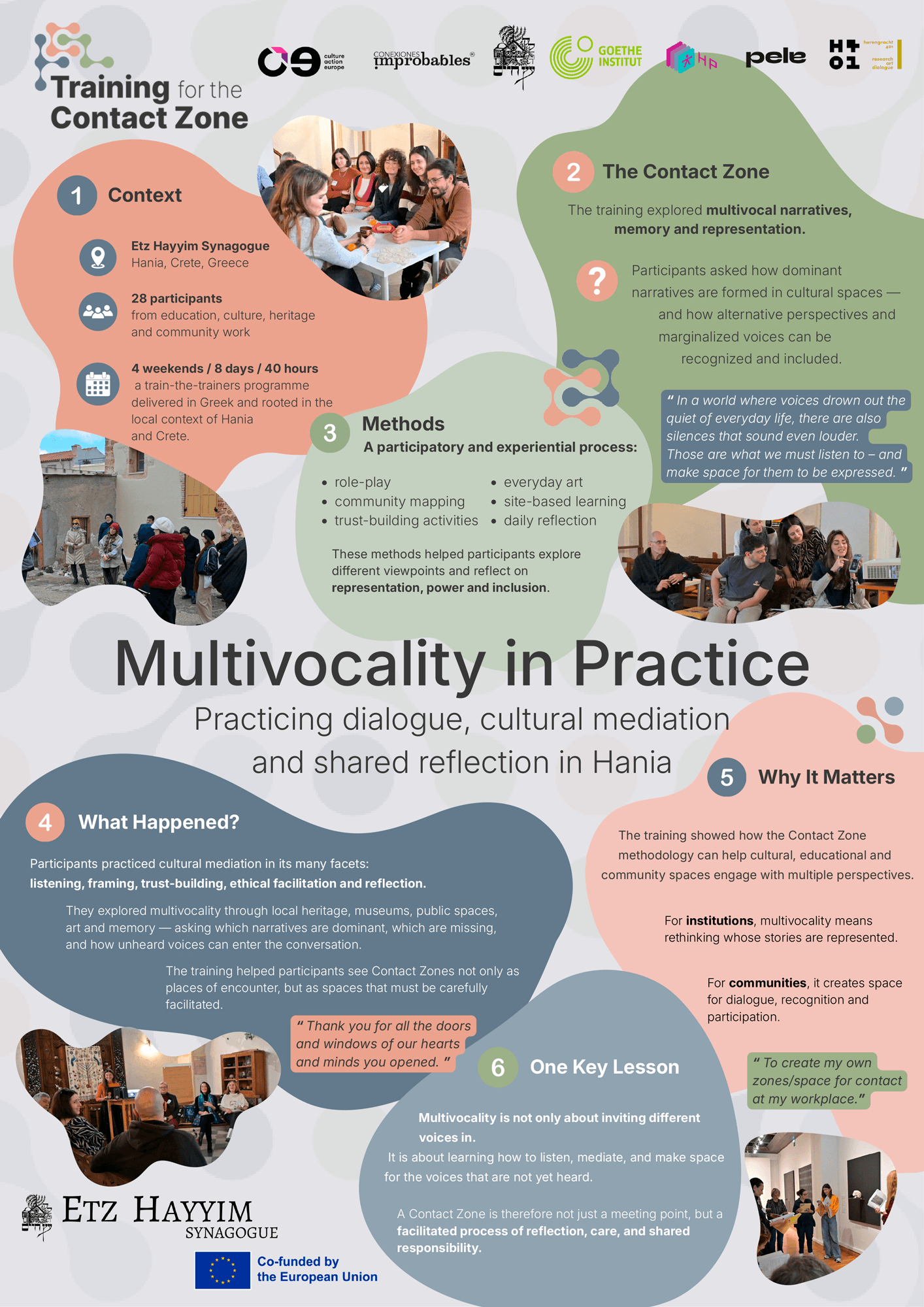
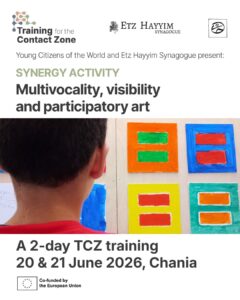
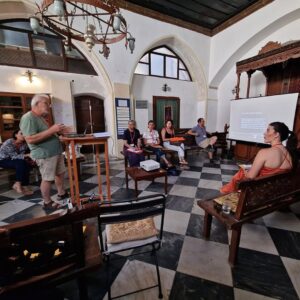
The training took place over four weekends in January and February 2026 at Etz Hayyim Synagogue in Chania and brought together participants from diverse professional backgrounds, including educators, cultural workers, artists, guides, researchers, and community practitioners.
As part of the project’s implementation phase, the Chania training, along with the Porto and Budapest ones, served as a practical testing ground for the newly developed TCZ curriculum. Over the course of a 40-hour programme, participants engaged with all curriculum modules, which were translated into Greek by the local team. Delivering the training fully in Greek significantly strengthened its accessibility and relevance to the local social and cultural context, allowing participants to engage more deeply and naturally with the programme’s concepts and discussions.
The programme combined theoretical input, facilitated discussions, artistic practices, role-playing activities, collaborative exercises, reflection sessions, and site-based learning experiences. Participants explored themes such as interculturality, contested heritage, cultural mediation, collective trauma, multivocality, representation, and digital environments in Contact Zones.
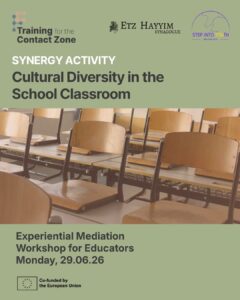
Several sessions were developed in collaboration with guest experts from the fields of social anthropology, museum education, art history, facilitation, and non-formal education. Participants also engaged directly with cultural institutions in Chania, including the Municipal Art Gallery and the Archaeological Museum of Chania, using these spaces as starting points for critical discussions on narrative construction, inclusion, memory, and cultural interpretation.
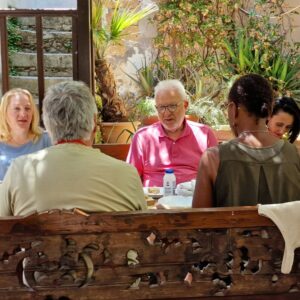
Throughout the training, emphasis was placed on creating a participatory and reflective environment where learning emerged not only through discussion, but also through shared experiences, collaborative creation, and collective reflection. Daily reflection sessions, shared meals, experiential workshops, and artistic interventions all became part of the pedagogical process itself.
Results
The Chania training brought together a committed and highly engaged group of participants who collectively explored how Contact Zone methodologies can be applied within cultural, educational, and community contexts.
Participants developed practical facilitation tools and mediation skills while also reflecting critically on representation, power-sharing, participation, and ethical cultural practice. Through experiential learning processes, they engaged with questions of whose voices are present or absent within institutions and public narratives, and how more inclusive and dialogical approaches can be created.
The training also demonstrated the adaptability of the TCZ curriculum to local realities, connecting the broader methodology to the specific historical, social, and cultural context of Crete. By the end of the programme, participants had not only deepened their understanding of Contact Zones as a concept, but had also begun envisioning ways to integrate these approaches into their own professional environments and communities.
Beyond the formal curriculum, the training fostered new connections, collaborations, and ongoing conversations among participants, trainers, facilitators, and local institutions. What emerged over the four weekends was not only a training programme, but a temporary Contact Zone in itself – a shared space for dialogue, reflection, challenge, and collective learning.
About the trainers
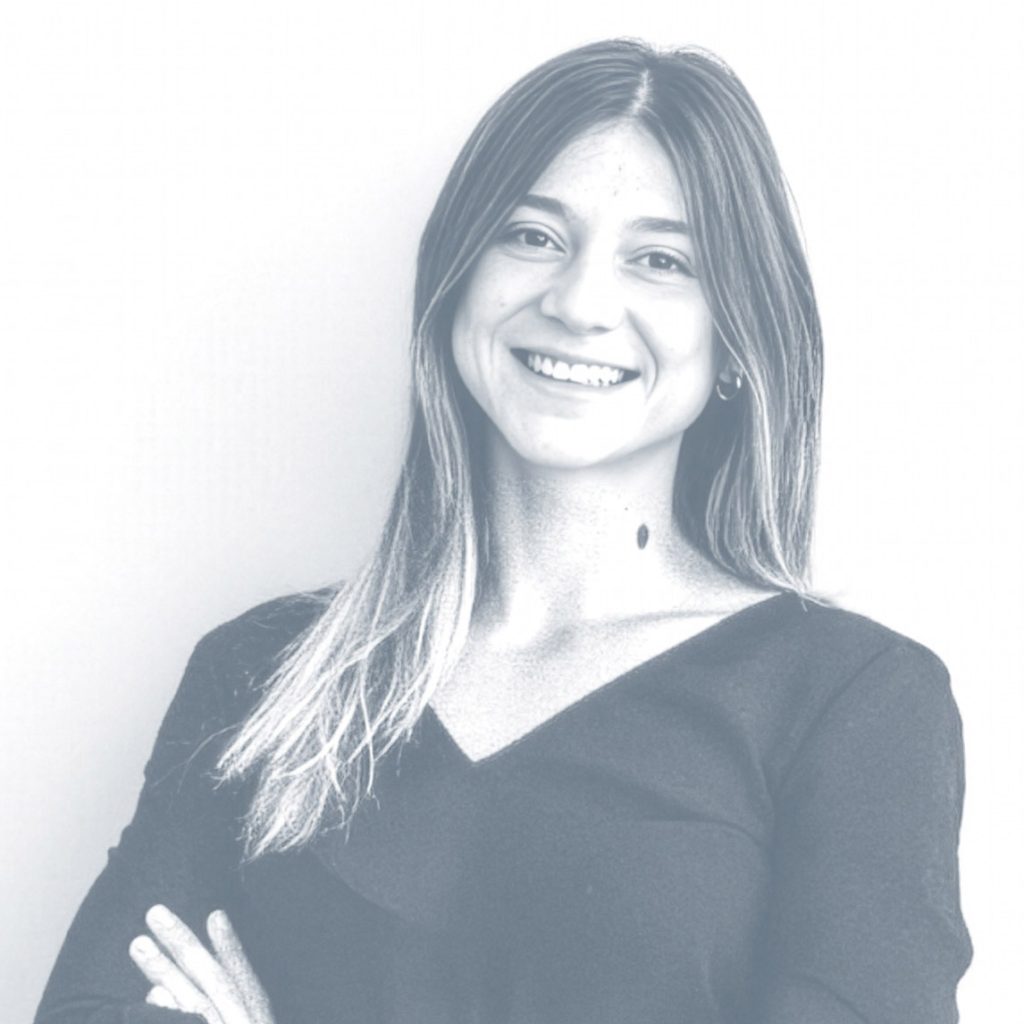
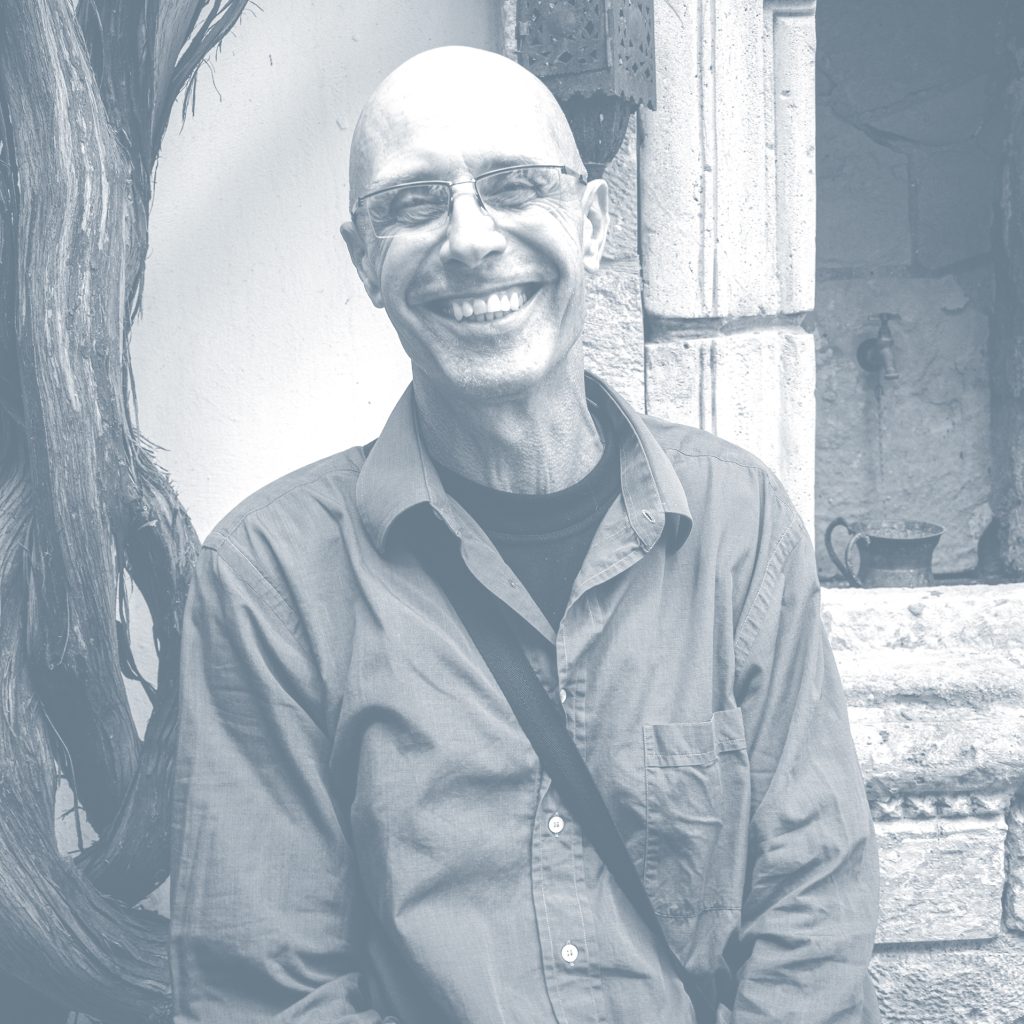
The training was led by Eleni Antoniadou and Konstantin Fischer.
Eleni Antoniadou is a special education teacher based in Chania and Programme Coordinator at Ecogenia. Her work combines formal education, curriculum design, youth training, community engagement, and social impact. Her experience in education and non-formal learning helped ground the training in accessible, reflective, and locally relevant pedagogical practice.
Konstantin Fischer is an artist, curator, photographer, and founder of Young Citizens of the World. His work in Chania uses everyday art practices to explore diversity, power relations, ambiguity, conflicting narratives, and contested heritage. His artistic and intercultural practice shaped the training’s emphasis on creativity, dialogue, and embodied learning.
Together, the trainers created a learning environment based on trust, active participation, experimentation, and reflection.