Training for the Contact Zone – Vitoria-Gasteiz
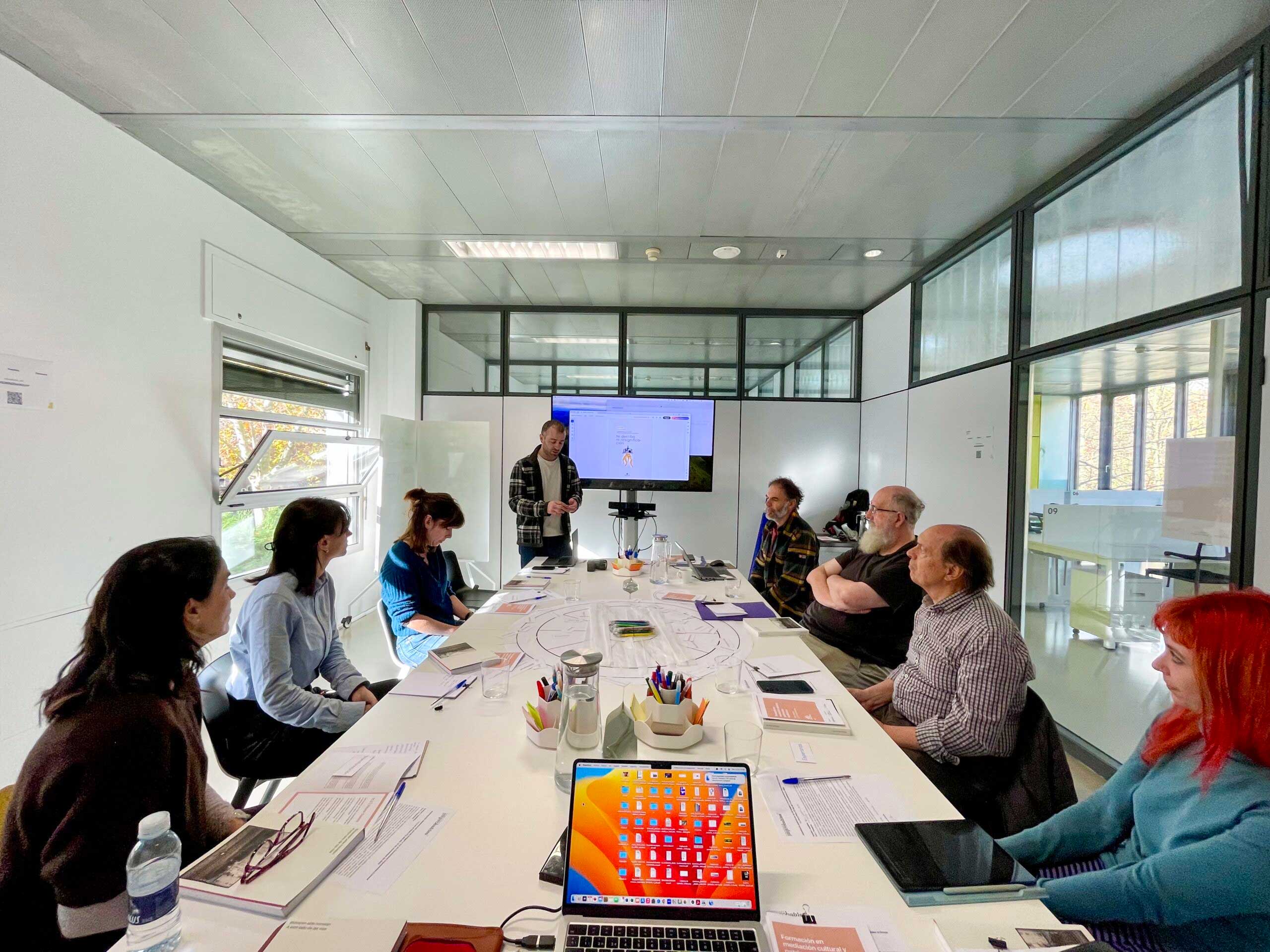
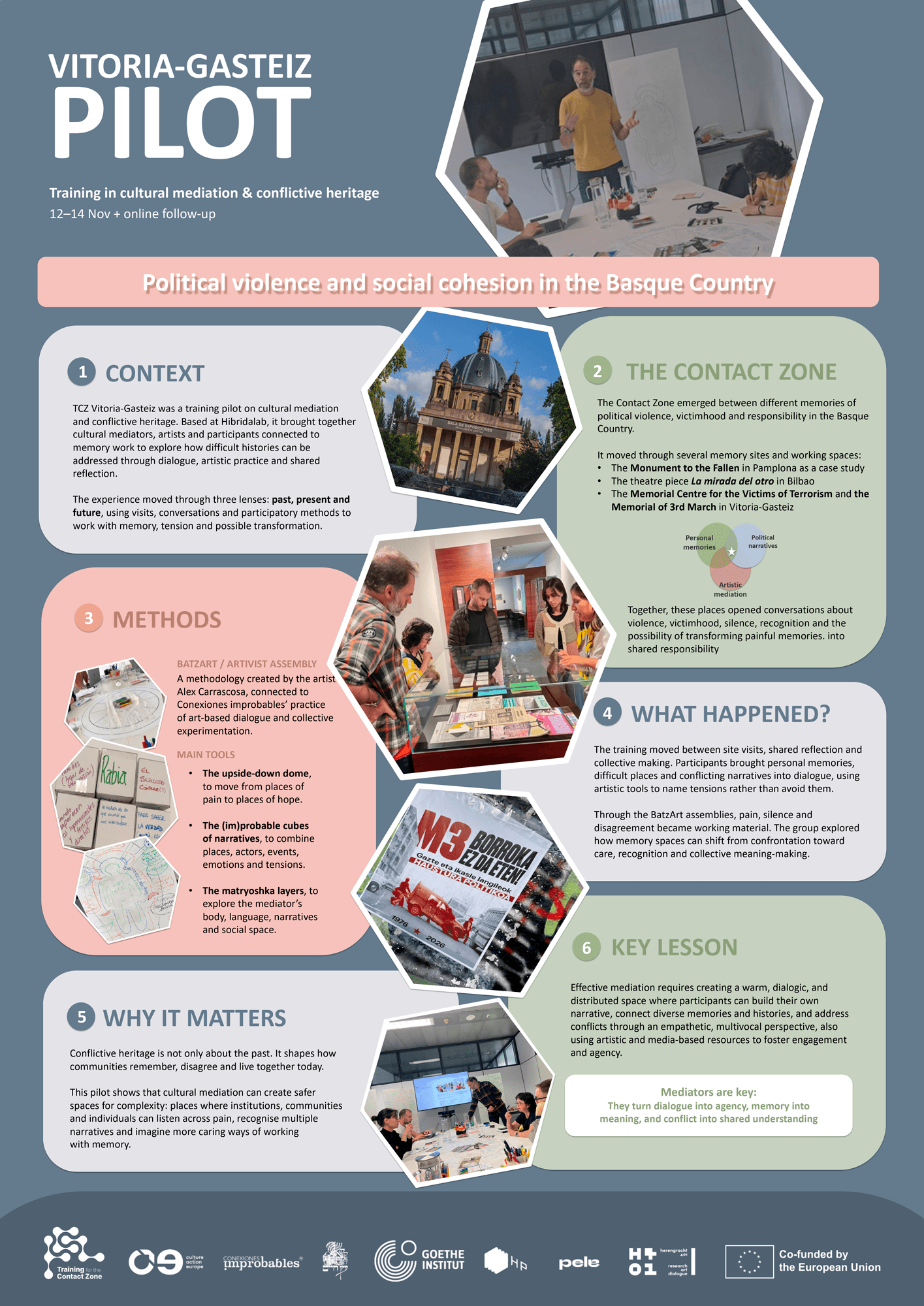
From 12 to 14 November 2025, a pilot training took place in Vitoria-Gasteiz as part of the European project Training for the Contact Zone, led by Conexiones improbables. The course brought together professionals from the cultural, educational and social sectors around a shared aim: to develop tools for engaging with memory, conflict and diversity in participatory and transformative ways.
The programme was structured around three interrelated dimensions — personal, community and territorial— which served as frameworks for exploring both individual and collective memories, acknowledging their layers, silences and tensions. Throughout the process, memory was approached as a living, malleable material — something to be handled with care, attention and creativity. It became a true crafting of memory: a patient, situated practice of shaping experience into stories, images and shared meaning.
In the Basque context — where recent history is marked by wounds, absences and unspoken words — the training offered a space to listen, revisit, represent and give form to what is often still difficult to name. Rather than seeking closure or consensus, the process opened questions, encouraged the exchange of perspectives, and supported the design of cultural tools for approaching conflict in sensitive, critical and constructive ways.
The training included an introductory online session, three in-person days at Hibridalab (Vitoria-Gasteiz), and a final online meeting dedicated to collective reflection.
The in-person training course on CULTURAL MEDIATION IN THE FACE OF CONFLICTIVE LEGACIES was structured around three sessions, each focusing on a specific set of themes: 1) the PAST; 2) the PRESENT; and 3) the FUTURE.
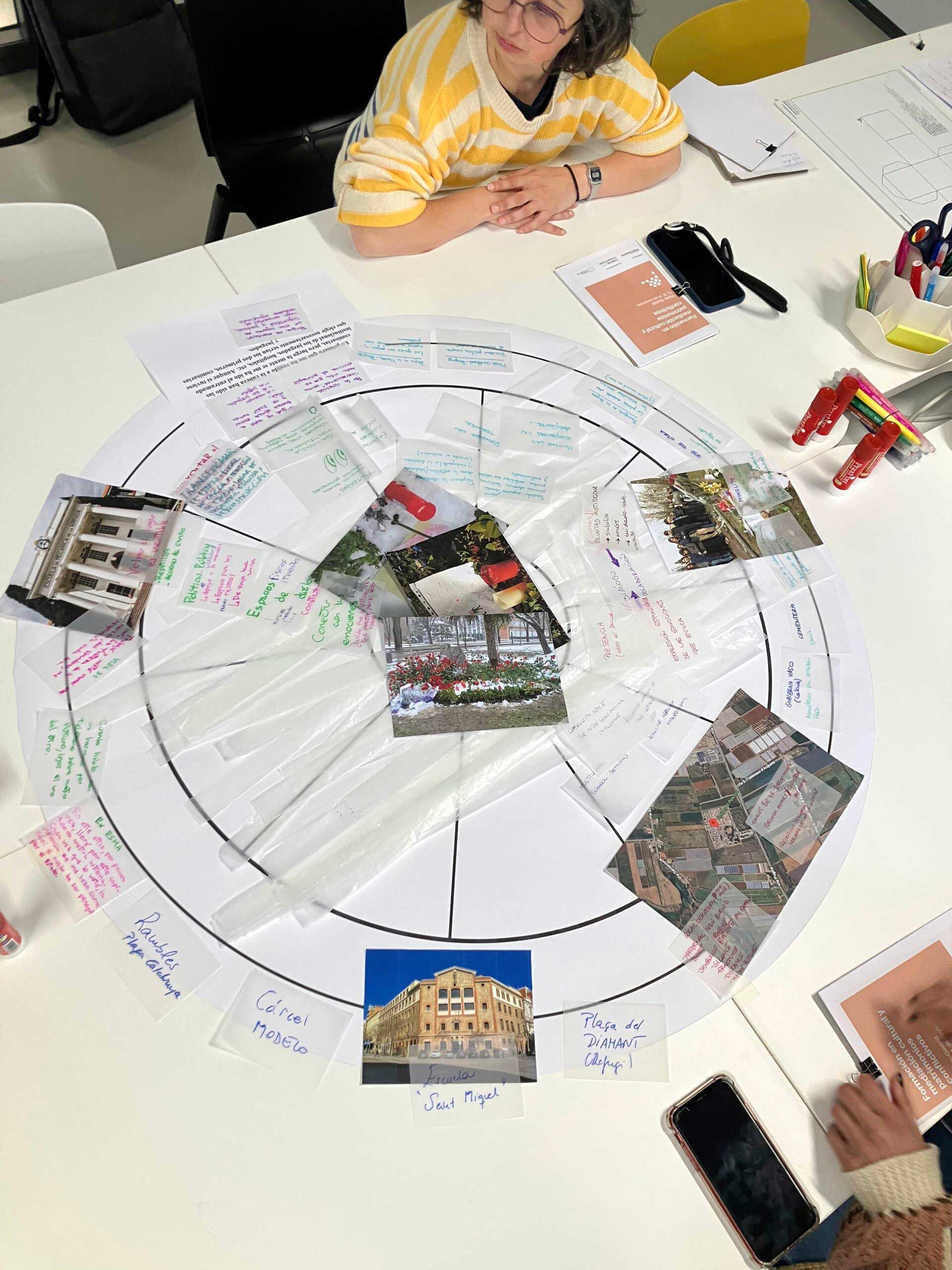
During the session on THE PAST, which took place on Wednesday, 12 November 2025, the topics of “personal and family memory, the silenced, the uncomfortable” were addressed. After welcoming the participants to HibridaLab (Álava Centre for Open Innovation and Creative Transfer), we reflected on “multipartiality” and two members of the “Caídos Irauli” collective, Iñaki Arzoz and Xabier López de Uralde, gave a presentation on the transformation of the “Monument to the Fallen” in Iruñea-Pamplona entitled “Neither demolition nor reinterpretation”. Next, we held the first BatzArt or Artivist Assembly on the conceptual-graphic structure of the “Spiral of Time.” In the afternoon, after continuing with BatzArt, the group of paticipants travelled to Bilbao to see the play “La mirada del otro” (The gaze of the other) in the framework of “Rescoldos de paz y violencia” (Embers of Peace and Violence) by the documentary theatre company Proyecto 43-2 at the Campos Elíseos Teathre.
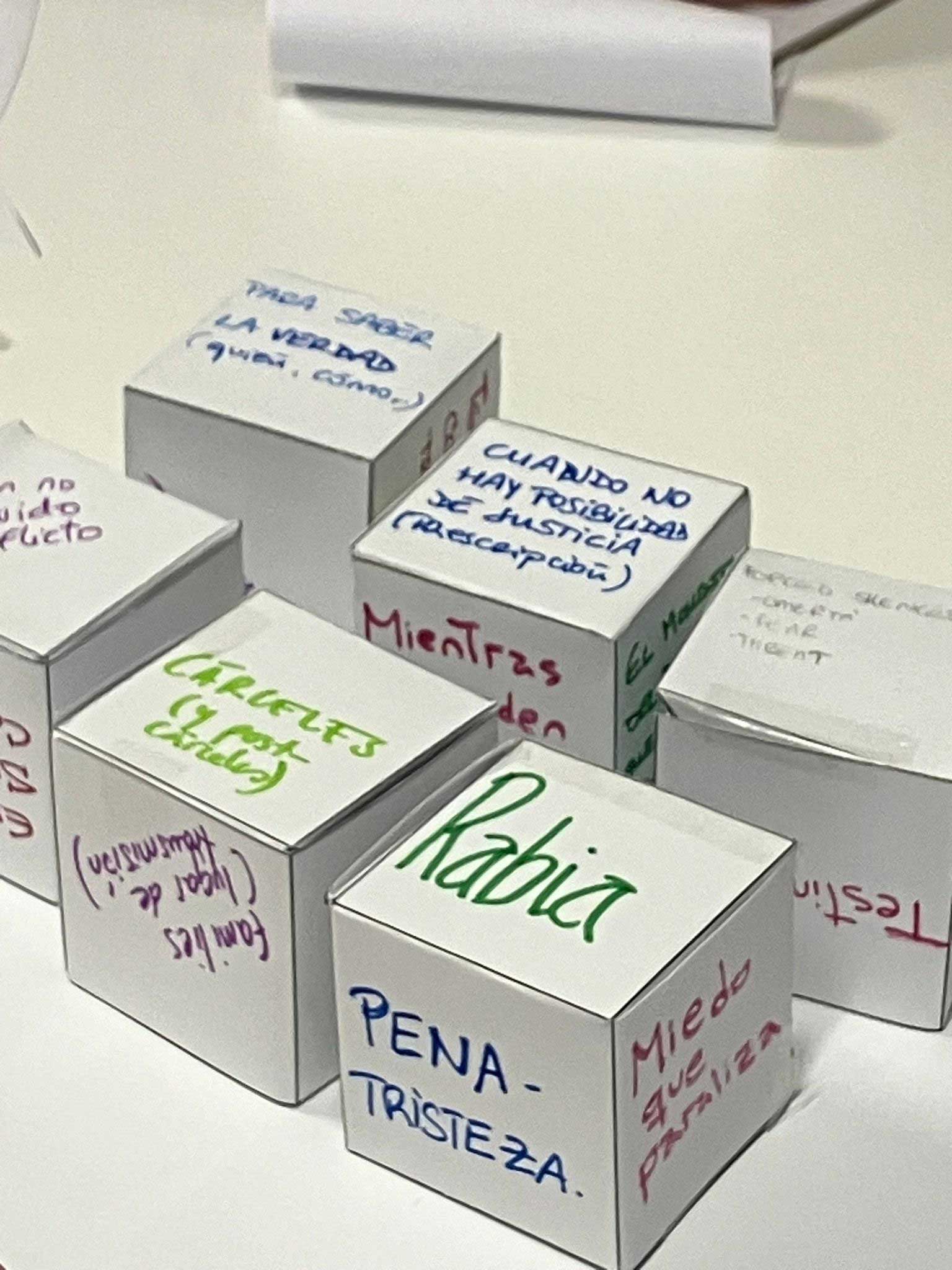
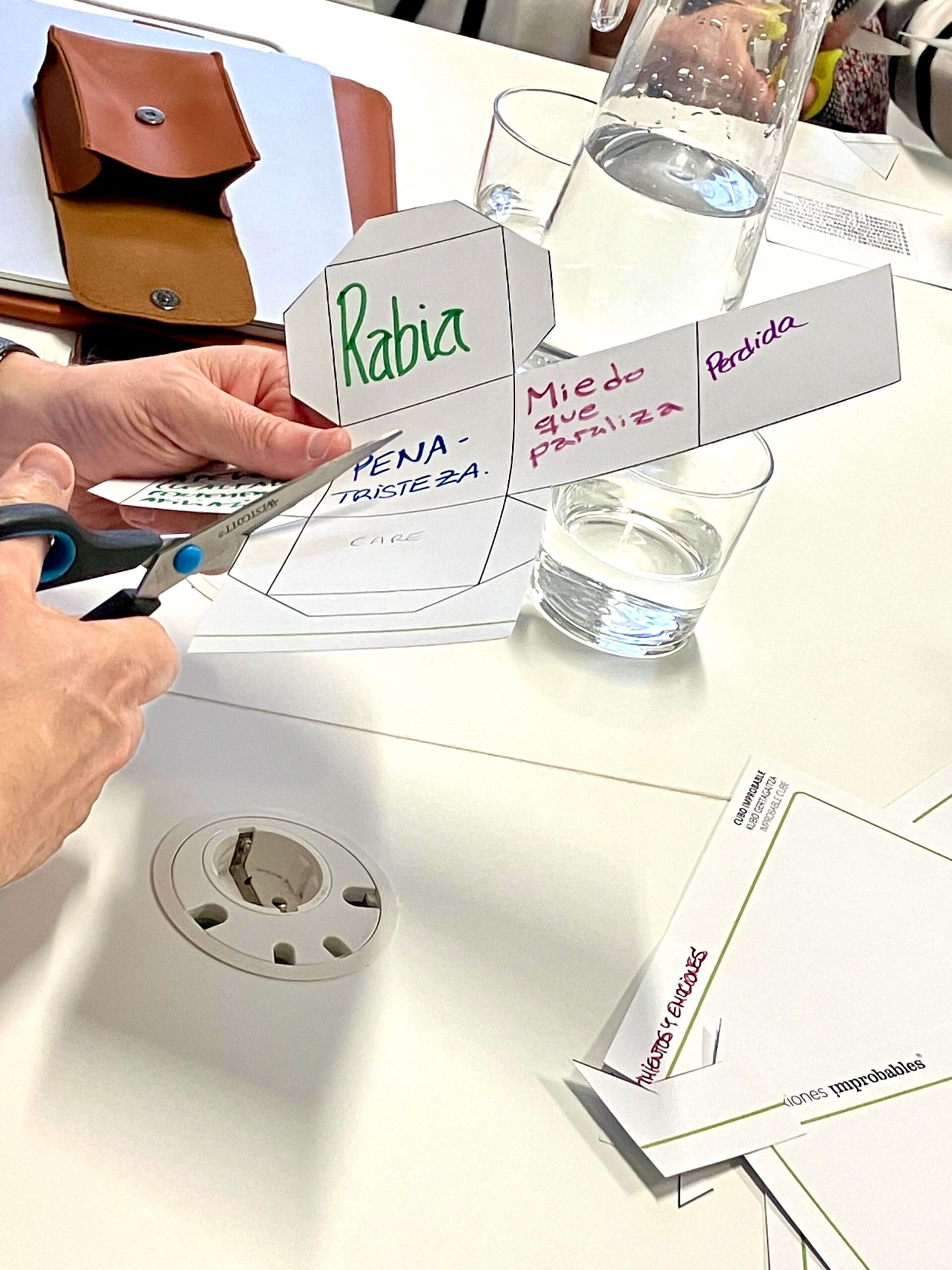
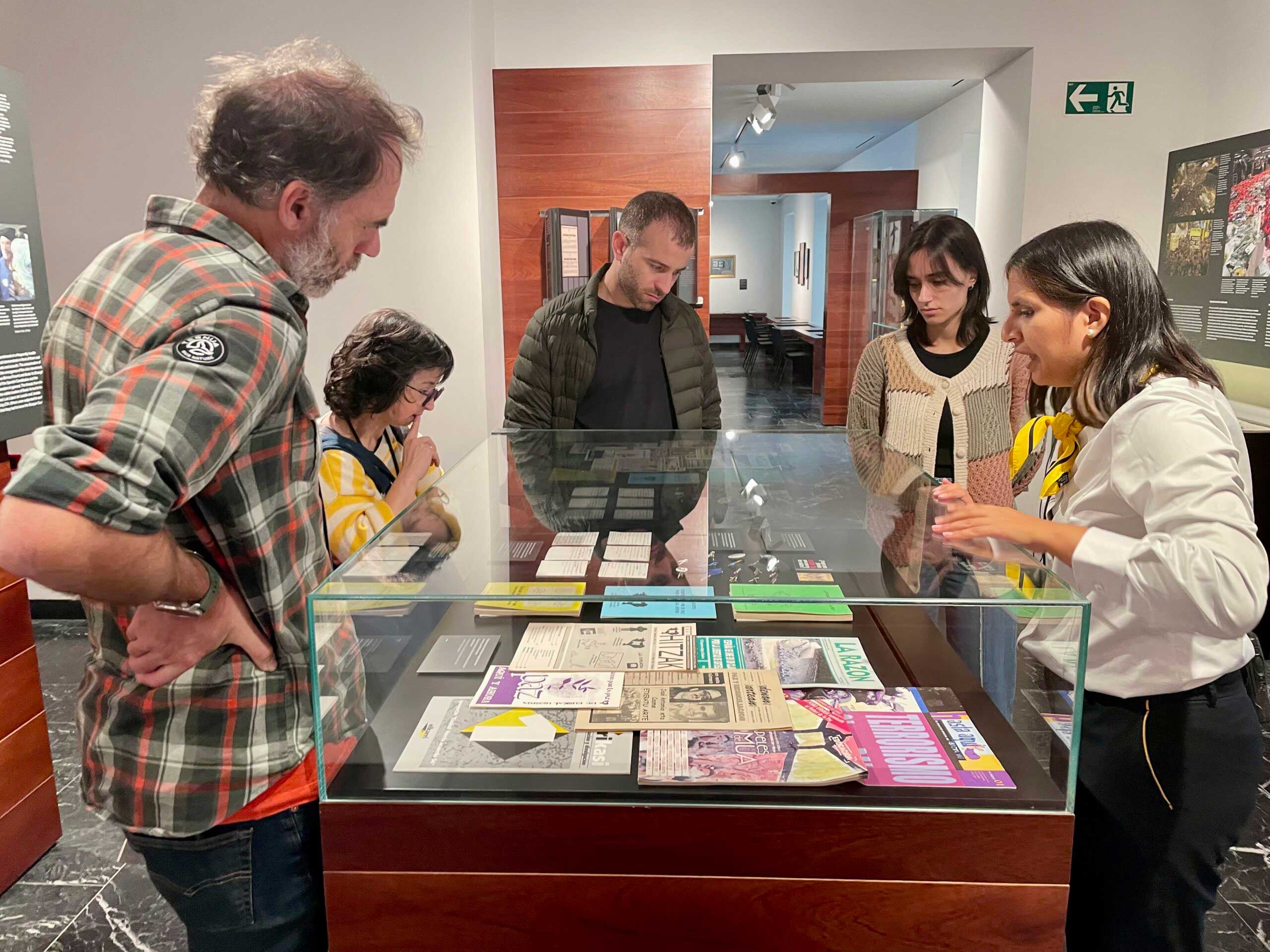
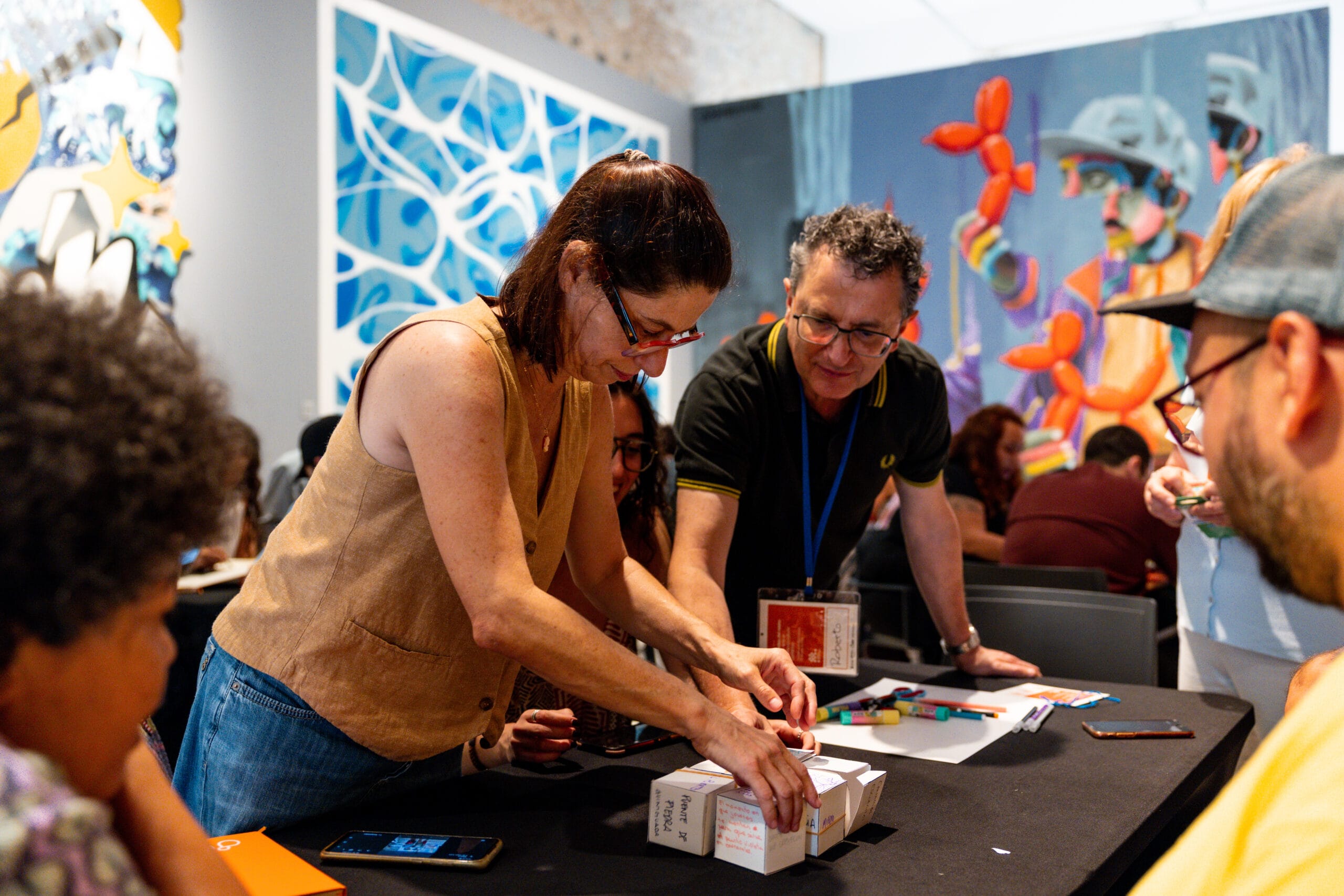
During the PRESENT day, on Thursday 12 November, we discussed “the struggle of stories, cultural conflict and conflicting narratives“. The day began with a visit to the Memorial to the Victims of Terrorism Centre and continued at HibridaLab with a discussion on “stories and tensions” and a BatzArt on “assemblages of improbable narratives“(using the ‘Improbable Cubes’ tool).
During the FUTURE day, on Friday 14 November, the “craft of memory” was explored as a function of cultural mediation. On that day, the neighborhood of Zaramaga and the 3 March Memorial were visited. Afterwards, the group returned to HibridaLab to hold a third BatzArt or Artivist Assembly of imagination and piloting of a multipartial Cultural Mediation.
The BatzArt or Artivist Assembly (Carrascosa, 2009) was the common methodology for the three days. The BatzArt consists of the introduction of artistic elements or constructions—verbal-literary, pictorial, graphic, sculptural, dramatic, or performative—into the assembly session.
Four conditions must be met for the articulation of a BatzArt:
1. the staging—circle of chairs (or common table)
2. the work structure—Militant Research (or IAP)
3. the facilitation of the process—the exercise of facilitation:
- 3.1) the catalysis of shared consciousness;
- 3.2) the construction of consensual agreements; and
- 3.3) the mobilisation of productive action
4. the material to be transformed, in this case, tense and conflictive historical heritage contexts and the exercise of cultural mediation within them.
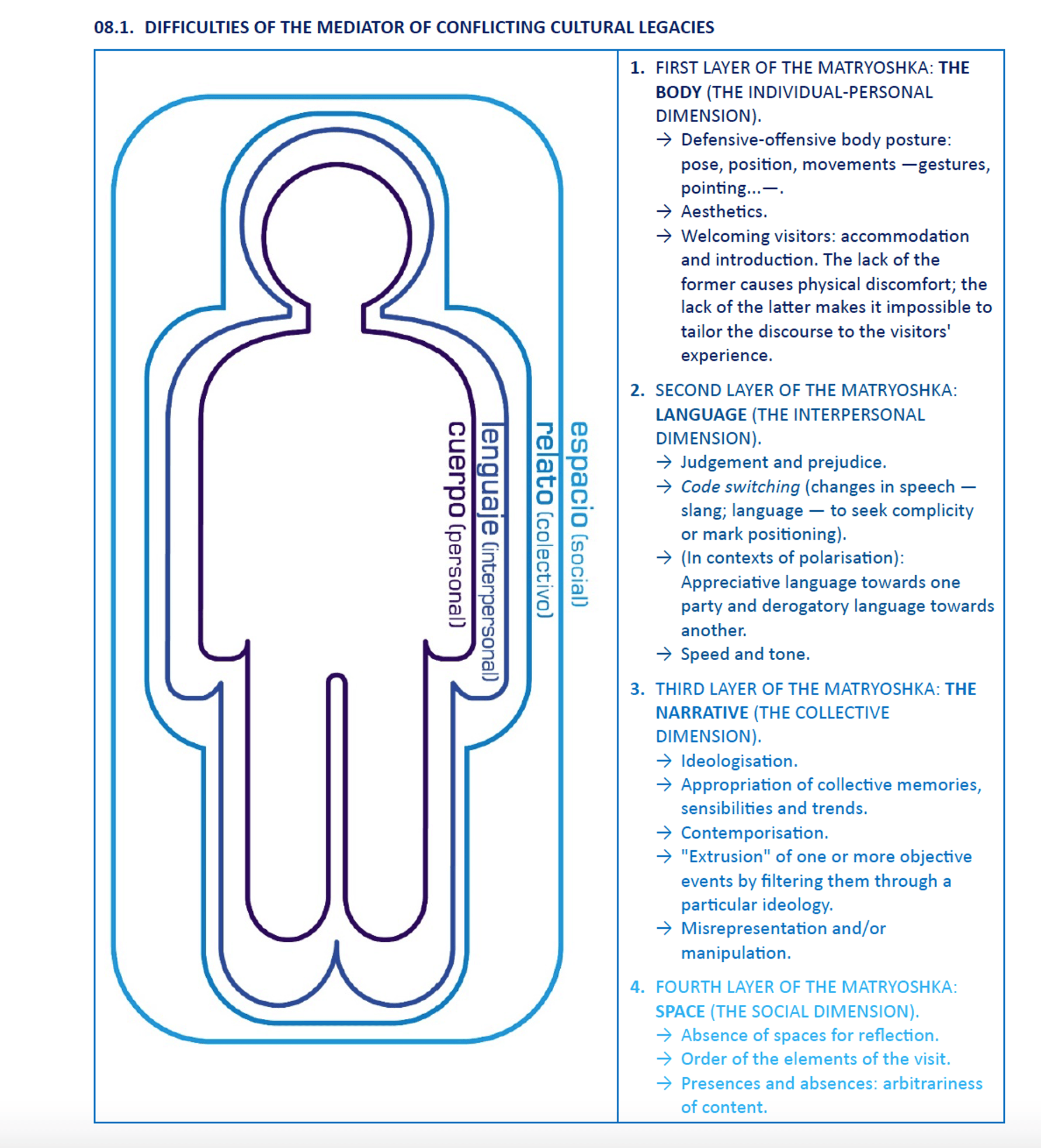
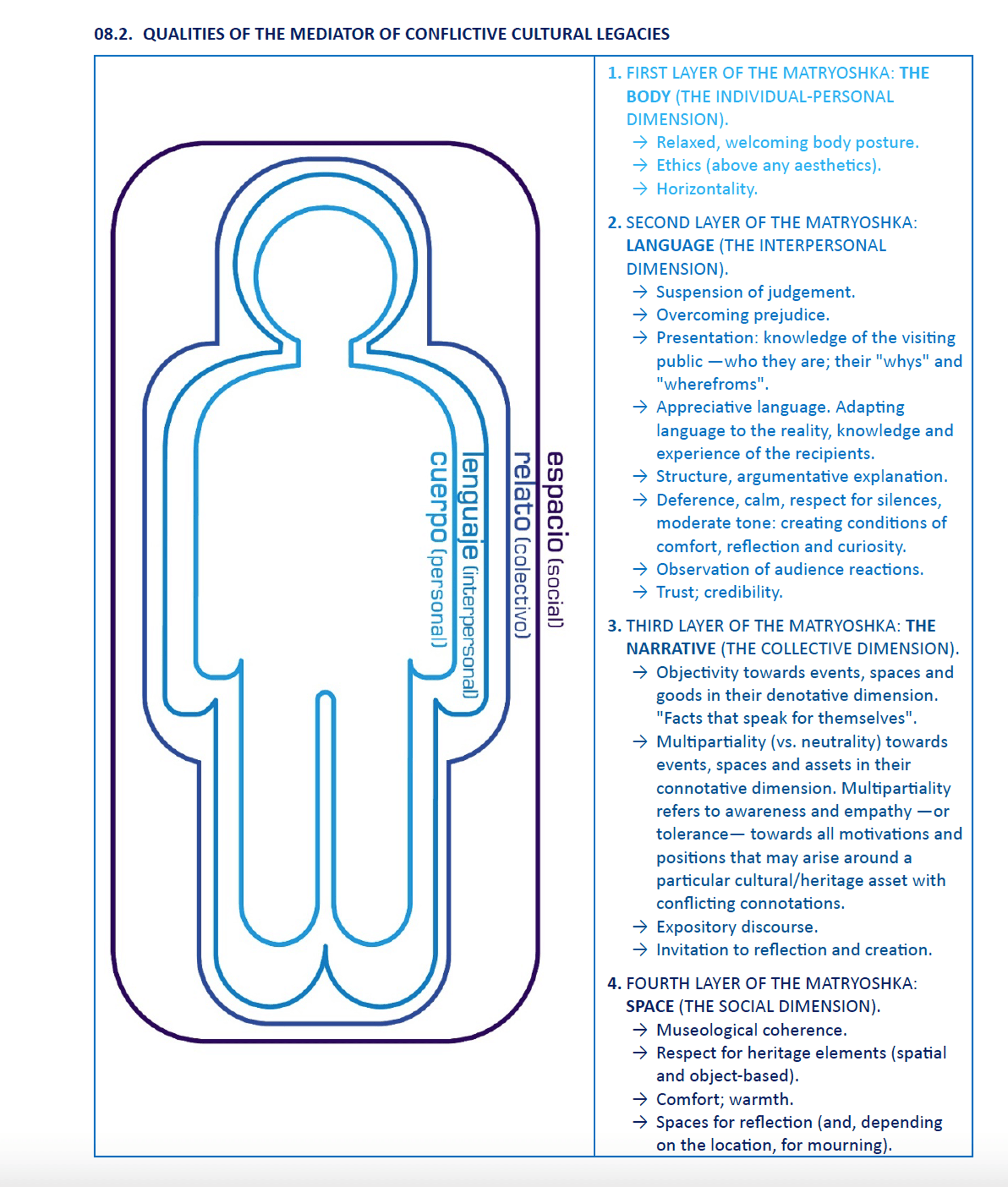
The key outcome, beyond a process of conceptual exploration of mediation concerning contentious heritage—specifically in the context of violence in the Basque Country—was the identification of the qualities required of a mediator dealing with marginalised memories and complex heritage, and the difficulties they face.
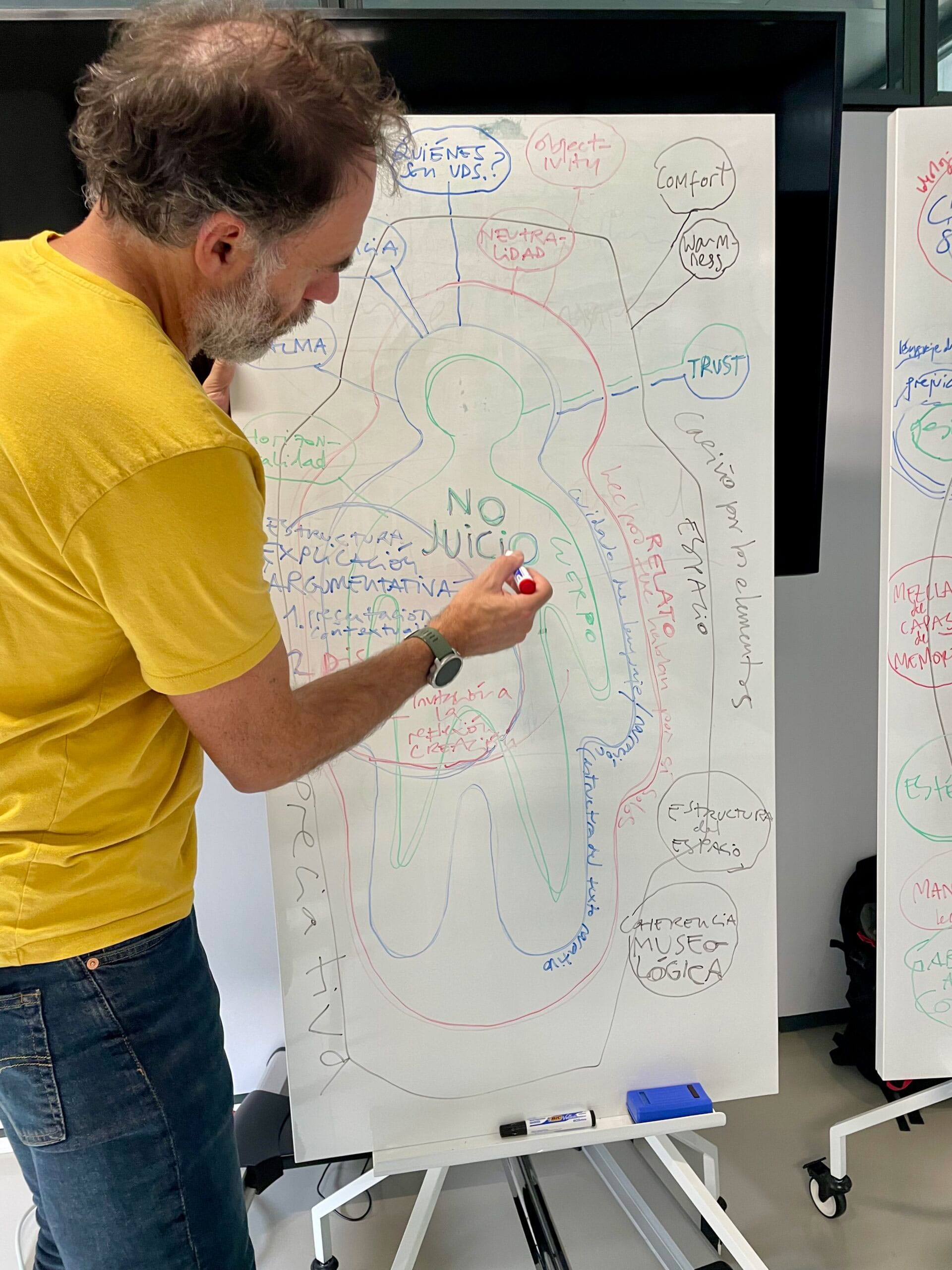
A four-stage Matryoshka model was used for the analysis (see photos):
- Space (social)
- Narrative (collective)
- Language (interpersonal)
- Body (personal)