

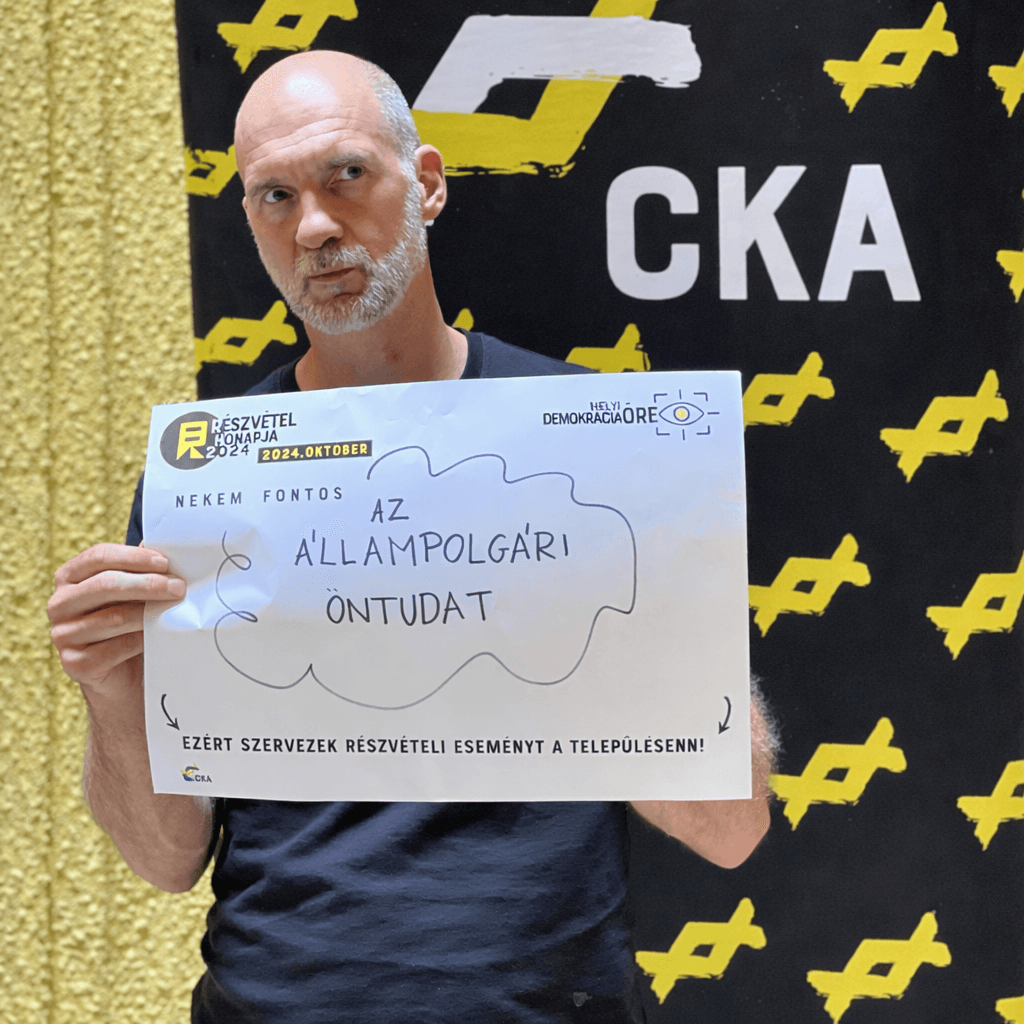
Horváth-Kertész Balázs mentor-tréner, a Civil Kollégium Alapítvány szakmai csapatának tagja Budapesten végeztem művészetelmélet szakon, ahol a vizuális reprezentáció, a köztér és a kollektív emlékezet összefüggéseivel foglalkoztam. A közösségszervezéssel a Szabadság téren ismerkedtem meg 2014-ben, az Eleven Emlékmű megalakulásakor. Ott tapasztaltam meg, hogy az emlékezetpolitika nem elvont tudományos vita, hanem élő, konfliktusos és mélyen demokratikus gyakorlat: közösségek küzdelme a múlt értelmezéséért és a nyilvános tér jelentéséért.
Az Eleven Emlékműben kezdetben önkéntesként, majd 2016-tól a CKA támogatásával vettem részt a közéleti beszélgetések szervezésében. Ezek a nyilvános viták számomra azt jelentették, hogy az emlékezés nem pusztán visszatekintés, hanem cselekvés: a jelen politikai és morális kereteinek alakítása.
Közösségszervezővé Szentendrén váltam, ahol részt vettem a Civil Kotta csoport alapításában. Itt már tudatosan foglalkoztam azzal, hogyan lehet az emlékezethez kapcsolódó konfliktusokat és közéleti kérdéseket strukturált, részvételi folyamatokká alakítani.
Ezt követően a Rendszerszint Országos Közösségszervező Műhely szakmai vezetőjeként országos szinten dolgoztam civil közösségek fejlesztésén. Jelenleg az aHang aPont országos hálózatának építésén dolgozom, mentor-trénerként közösségszervezőket és civil csoportokat támogatok abban, hogy tapasztalatukból szervezett, stratégiai cselekvés szülessen.
Balázs Horváth-Kertész is a mentor-trainer and Head of the Systemic National Community Organizing Workshop at the Civil College Foundation (CKA).
He graduated in Art Theory in Budapest, where he focused on the intersections of visual representation, public space, and collective memory. He encountered community organizing in 2014 at Szabadság Square, during the formation of the Eleven Memorial (Eleven Emlékmű) group. There, he experienced firsthand that memory politics is not an abstract academic debate, but a living, conflictual, and deeply democratic practice: a struggle by communities over the interpretation of the past and the meaning of public space.
Within the Eleven Memorial group, he first participated as a volunteer and, from 2016 onward, moderated public discussions with the support of the Civil College Foundation. For him, these public debates demonstrated that remembering is not merely retrospective reflection, but an act of civic engagement—shaping the political and moral frameworks of the present.
He became a community organizer in Szentendre, where he co-founded the Civil Kotta group. There, he worked consciously on transforming conflicts and public issues related to memory into structured, participatory processes.
Later, as Head of the Systemic National Community Organizing Workshop, he worked nationally on strengthening civil communities. He is currently involved in building the national aPont network of aHang, where he focuses on a practical question: how lived civic experience—often rooted in perceived injustice—can be transformed into organized, strategic public action.
At the core of his work lies the conviction that communities should not merely endure public narratives and political decisions, but actively shape collective memory and public life.