

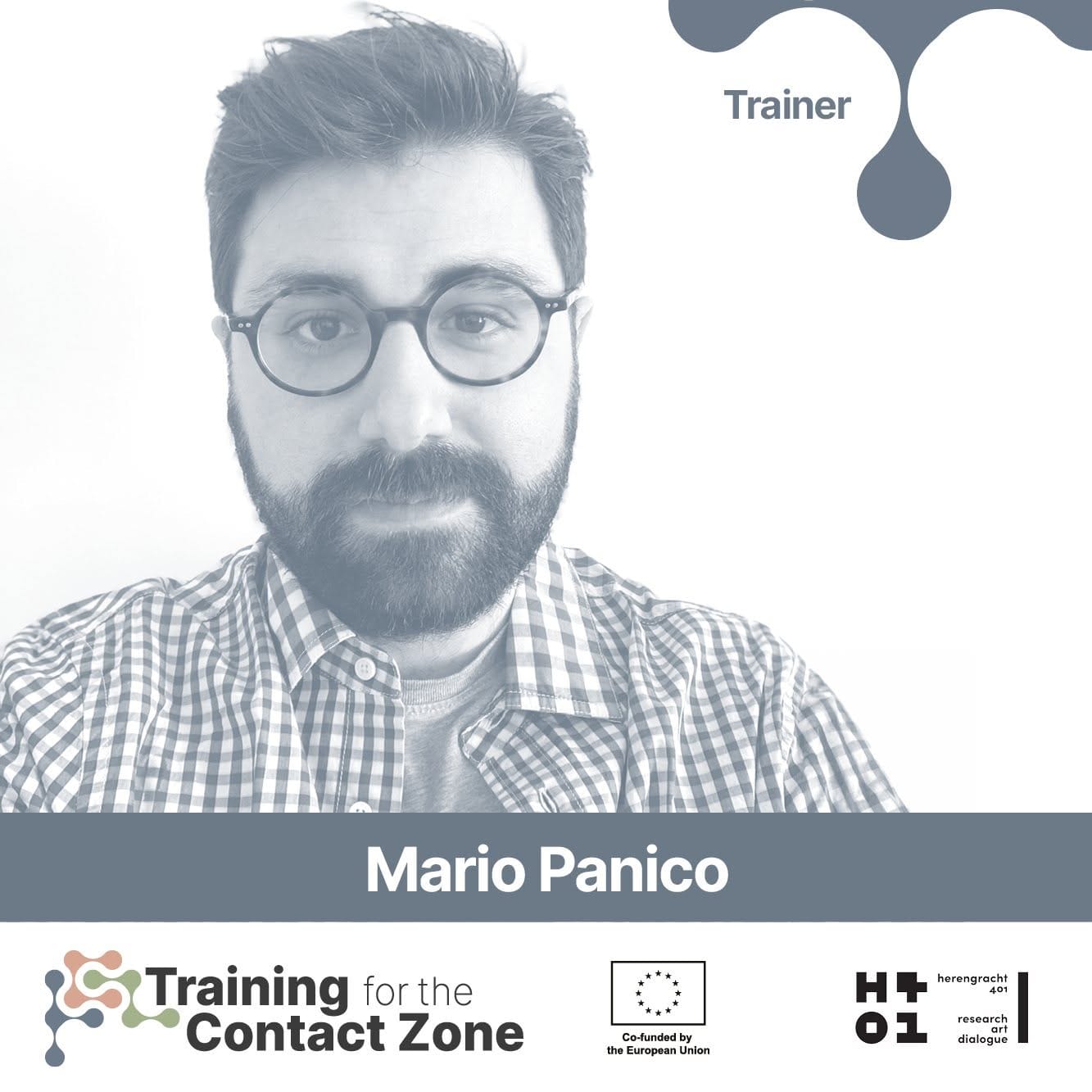
Mario Panico is a research fellow and adjunct lecturer at the University of Bologna, Department of the Arts. He is a memory studies scholar, and his research lies at the intersection of visual culture, difficult heritage, and affect theory. At the moment, he is working on the representation of perpetrators’ houses and villas in the visual arts and their preservation in trauma sites. In 2024, he published his first book, “Spaces for Nostalgia. Difficult Memories and Material Consolations” (London, Palgrave Macmillan).
As part of the preparation for the training in Amsterdam, an online onboarding meeting was held, giving participants the opportunity to e-meet each other before the in-person training. In this session, Mario explored together with the participants Module 5 of the project’s training curriculum: 𝐌𝐮𝐥𝐭𝐢𝐯𝐨𝐜𝐚𝐥 𝐍𝐚𝐫𝐫𝐚𝐭𝐢𝐯𝐞𝐬: 𝐌𝐞𝐦𝐨𝐫𝐲, 𝐑𝐞𝐩𝐫𝐞𝐬𝐞𝐧𝐭𝐚𝐭𝐢𝐨𝐧, 𝐚𝐧𝐝 𝐑𝐞𝐬𝐢𝐠𝐧𝐢𝐟𝐢𝐜𝐚𝐭𝐢𝐨𝐧.
Mario focused on the Verzetsmuseum (Resistance Museum) in Amsterdam as a case study on multivocality: where perpetrators, resistance fighters, and victims are presented side by side within the same exhibition space. This approach does not suggest equal roles or moral values, but rather seeks to make us reflect on how personal lives within collective events can be represented.
The session proceeded on drawing connections between the Netherlands’ colonial past and World War II, highlighting how multivocality can deepen our understanding of interconnected historical narratives.